
سين جيم Seen Jeem
Enzo Zid General Trading WLLTrivia
3.54.00 Reviews
- Version
- 1.0.1
- Installs
- 100.00K
- Age Rating
- Everyone
Screenshots
Our Review of سين جيم Seen Jeem
 Analysis by Appyee
When I want a quick trivia game for a group, I usually look for three things first: whether everyone can understand the format quickly, whether the questions create conversation instead of awkward waiting, and whether the game works for the kind of gathering I have in mind. Seen Jeem caught my attention because it is built around Arabic-language social play rather than trying to be a general-purpose quiz packed with unrelated modes.
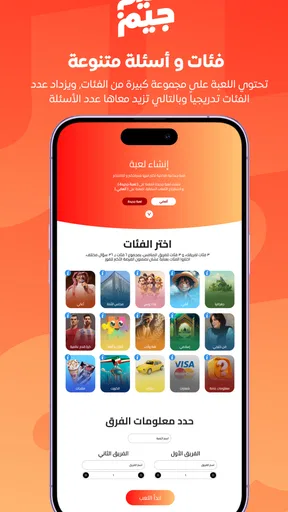
The game is listed as a free trivia title from Enzo Zid General Trading WLL, with an Everyone age rating. Its store summary presents a group-friendly experience with six categories and three helps, aimed at adding energy to a gathering. That gives the game a clear identity: it is less about quietly testing yourself and more about giving friends or family something simple to play together.
I also noticed that it has passed the early discovery stage without becoming a huge mainstream name. It has over one hundred thousand installs, an average score of 3.5 from around two hundred ratings, and a small number of written reviews. I would read that as a reason to try it with realistic expectations: there is enough interest to show that people are finding it, but the rating suggests that the experience may suit some groups much better than others.
How I would decide whether it fits my group
My first decision criterion is language and social setting. A trivia game can be technically polished and still fail if the questions do not feel natural for the people playing. Seen Jeem is most appealing when the group is comfortable with Arabic questions and wants a shared activity for a family visit, a friends’ evening, or a casual gathering. It makes more sense there than using a solo quiz app and asking everyone to pass one phone around without a clear structure.
The second criterion is the type of competition you enjoy. I would choose this game for short, lively rounds where people can answer, argue playfully, and use a help at the right moment. I would not choose it expecting the depth of a specialist knowledge platform, a long campaign, or a carefully balanced tournament ladder. Its value is in making a room participate, not in turning trivia into a serious study program.
The six-category setup matters because it can prevent a group from getting stuck in one narrow subject. A mixed group may include someone who enjoys history, another person who prefers entertainment, and someone who is strongest at everyday knowledge. Variety gives each player a chance to contribute. At the same time, categories alone do not guarantee that every question will feel equally fair, so I would treat the game as a social contest rather than a definitive measure of intelligence.
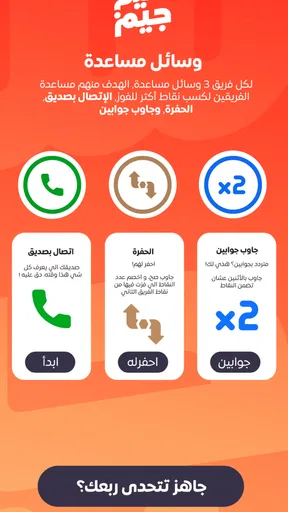
The three helps are another important decision point. In a group game, a help is not only a rescue button; it can change the conversation. A player might save it for a difficult question, use it early to build confidence, or spend it when the group is divided. I recommend agreeing before starting whether helps belong to individual players or to the whole team. That small rule can prevent arguments and makes the round feel more deliberate.
There is also a practical question: who controls the phone? If your gathering is comfortable with one person hosting and reading the screen, the game can become a shared activity. If every participant wants a private device, simultaneous answers, or detailed personal progress, a different trivia format may be more suitable. I would decide this before downloading rather than discovering halfway through a round that the group expected a different style of play.
The strongest setting: a relaxed Arabic-speaking gathering
In my view, the best everyday use is a family or friends’ gathering where conversation is already happening but people want a light activity to give the evening some shape. One person can start a round, invite everyone to think aloud, and use the categories to move between subjects. The game gives the group a reason to focus without demanding the preparation that a board game or a formal quiz night often requires.
I can also see it working well after dinner, during a waiting period at a gathering, or as a warm-up before a larger game. The free price makes experimentation easy, especially when the group is unsure whether it wants a trivia session at all. Nobody needs to commit to buying a boxed game or organizing printed questions before finding out whether the mood is right.
A useful trick is to rotate the host instead of letting one person control every round. The host can explain the category, read the question clearly, and make sure quieter players get time to answer. This is not a special feature I would assume the app manages for you; it is a group habit that helps the game feel inclusive. Without it, the fastest or loudest player may dominate, which can make a simple quiz less enjoyable for everyone else.
What makes the format more engaging than a basic quiz
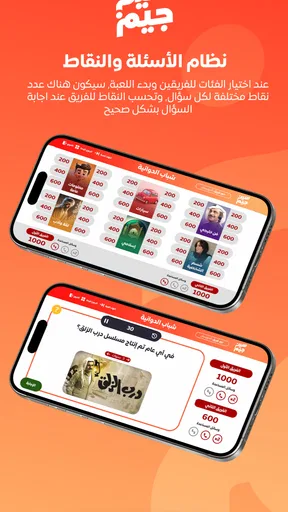
The combination of categories and helps gives the session a little more tension than a plain list of questions. A basic quiz often becomes a sequence of right or wrong answers, while a help introduces timing and judgment. Should I spend assistance on a question I almost know, or keep it for a category that is less familiar? That decision gives players something to discuss even before the answer is revealed.
It also creates a useful balance between knowledge and confidence. Someone who is not the strongest trivia player can still contribute by recognizing when a help would be valuable. In a mixed-age group, that can matter more than raw knowledge. Children, parents, and grandparents may not share the same strengths, but they can still make decisions together and enjoy the suspense.
I would encourage players to explain their reasoning after each answer, but keep that discussion short. The game works best when conversation adds humor and context rather than stopping the round completely. For a larger group, dividing people into small teams may be better than asking each person to compete alone. Teams reduce pressure and make the helps feel like shared resources instead of personal advantages.
Where the experience may feel limited
The average score of 3.5 is worth taking seriously, even though a rating cannot explain every individual experience. I would not treat it as a failure, but I also would not promise a flawless session. A game with a straightforward social concept depends heavily on question quality, pacing, clarity, and how well the interface supports the group. If any one of those feels awkward on your device or with your audience, the simplicity can become a weakness rather than a strength.
The current version is 1.0.1, so I see this as a relatively early product rather than a mature trivia ecosystem. That does not automatically make it unsuitable, but it does affect my expectations. I would be more forgiving of a small rough edge than I would be with an established platform that has had years to refine its presentation. Before relying on it for a planned event, I would open it once and test the basic flow myself.
Another limitation is replay value. Six categories can provide variety, but repeated play depends on how many questions you encounter and how quickly your group remembers them. Once everyone knows the answer to a question, the challenge disappears. If your friends play the same trivia app every week, they may eventually want a larger question pool, regular additions, or stronger customization. Seen Jeem is easier to recommend for occasional gatherings than for a daily competitive routine.
How it compares with familiar trivia alternatives
The usual alternative is a solo quiz app. That option is better when I want to practice privately, fill a few spare minutes, or track my own knowledge without coordinating with anyone else. Seen Jeem has the advantage when the goal is to get a room talking. Its social value comes from the shared decision-making around answers and helps, while a solo app usually offers a cleaner personal progression.
A second alternative is a broad party-game collection. Those apps may offer more types of entertainment in one place, which is useful if your group becomes bored quickly or wants to switch from trivia to drawing, word play, or guessing. Seen Jeem is the more focused choice when the group specifically wants Arabic trivia and does not need a large menu of unrelated games. Focus can be a benefit: there are fewer decisions before starting.
There is also the traditional spoken quiz, where one person prepares questions from memory or reads them from a website. That approach can be more flexible because the host controls the subjects, difficulty, and cultural references. It can also be tiring, inconsistent, and vulnerable to accidental hints. Seen Jeem offers a ready-made starting point, so I would choose it when convenience matters more than total control.
Finally, a physical board game may be better for a planned evening where people want visible pieces, a longer session, and a device-free table. A phone-based game is easier to carry and start, but the screen can become a distraction. If your group is intentionally trying to put phones away, a physical alternative is the clearer choice. If the phone is already part of the gathering and everyone is comfortable sharing attention, the app is more practical.
Who should try it, and who should skip it
I would recommend trying it if you want a free Arabic trivia game for occasional social use, especially with family or friends who enjoy mixed subjects and light competition. It is also a sensible choice for someone who prefers a quick setup over collecting questions or preparing a full quiz night. The Everyone rating makes it easier to consider for a broad household audience, although the actual enjoyment will still depend on the reading level and interests of the players.
I would skip it if you need a serious learning tool, a deep personal statistics system, or a highly structured competitive environment. I would also look elsewhere if your group expects multiplayer features across separate devices, extensive customization, or a continuously changing content library. Those are different priorities from the compact social experience I see here.
People who dislike group disagreement may not enjoy the helps as much as I do. Assistance can create fun tension, but it can also lead to debates about who should use it and whether someone received too much support. A simple house rule solves much of that: decide the number of helps available, whether they are shared, and whether discussion is allowed before selecting an answer. The game becomes smoother when those expectations are clear.
My practical way to start a session
I would begin with a small group rather than a crowded room. That makes it easier to see whether the question pace and category mix suit everyone. I would choose a host, explain the answer rules, and tell players that the aim is friendly competition rather than proving who knows the most. If the first round feels comfortable, I would then add teams or invite more people.
For a mixed-knowledge group, I would avoid letting one expert answer immediately every time. Give everyone a few seconds, ask for a second opinion, and use the helps as a strategic resource. This makes the game more accessible and reveals one of its less obvious strengths: it can reward communication, not just recall.
I would also stop while the group is still enjoying it. A free game can be tempting to continue indefinitely, but trivia loses energy when every round feels the same. A short session followed by conversation may leave a better impression than forcing a long competition. If the group wants more, it is easy to restart later; if not, the game has still done its job.
What to expect from installation and availability
The game is free, and its minimum operating-system requirement is Android 7.0 or later. That makes it accessible to many Android users, but I would still check the phone I plan to use before the gathering, particularly if it is an older spare device. A quick test is useful for confirming that the text is comfortable to read and that the host can move through a round without fumbling.
Because the title is available as a mobile trivia game rather than a physical product, the main cost of switching is not money; it is changing the group’s habits. Friends who are used to spoken questions may need a round to understand how to share the phone and handle helps. Conversely, players coming from a complex quiz platform may need to accept a simpler structure. I see that adjustment as small for casual use, but more important for groups with strong expectations.
The developer, Enzo Zid General Trading WLL, gives the game a distinct identity rather than making it feel like a generic international quiz label. I would still judge it by the actual session: how quickly people understand the questions, whether the categories keep everyone involved, and whether the helps add fun instead of confusion. Those are the details that determine whether I would keep it installed.
My recommendation
My recommendation is conditional but positive: try Seen Jeem if your priority is a simple, free Arabic trivia session for a social gathering. The six categories and three helps give the game enough structure to create friendly competition, while the low commitment makes it easy to test with your own group. I would not present it as the definitive trivia app for every player, because the modest average rating and early version suggest that expectations should remain measured.
For me, the deciding advantage is the way it can turn an ordinary break in conversation into a shared activity without requiring preparation. Its best audience is not the person chasing an elaborate ranking system; it is the host who wants a ready-to-start quiz that different people can enjoy together. That distinction is important, because the same simplicity that helps a family gathering may disappoint a dedicated trivia fan.
If I were choosing for a relaxed evening, I would install it, test one round before guests arrived, and set a few house rules about teams and helps. If I were organizing a formal tournament, teaching through questions, or looking for constant new content, I would compare it with a more specialized alternative. Seen Jeem is most convincing when used as a friendly conversation starter, not as a complete replacement for every kind of trivia experience.
Verdict
Strengths of سين جيم Seen Jeem
- Arabic interface makes navigation accessible for regional users.
- Wide range of trivia topics keeps question rounds varied.
- Quick matches are suitable for short gaming sessions.
- Competitive scoring encourages replay and friendly rivalry.
- Lightweight design should run smoothly on many devices.
Limitations of سين جيم Seen Jeem
- Some questions may depend on regional cultural knowledge.
- Difficulty can vary noticeably between consecutive questions.
- Online play may be less enjoyable with an unstable connection.
- Limited appeal for players who prefer non-trivia game genres.
- Ads or optional purchases may interrupt the overall experience.
Similar Picks in This Category
View All
Millionaire 2026 Quiz & Trivia
Quiz & Trivia Games by Submarine Apps4.5

Brain Test 2: Tricky Stories
Unico Studio4.7

Trivia Crack: Brain Quiz Games
etermax4.4

QuizzLand. Quiz & Trivia game
Quiz & Trivia Games by Mno Go Apps4.8

Brain Test: Tricky Puzzles
Unico Studio4.7

Logo Quiz
bubble quiz games4.5
Frequently Asked Questions
What is سين جيم Seen Jeem, and what can I do with it?
سين جيم Seen Jeem is an Arabic question-and-answer game designed around general knowledge, quick thinking, and friendly competition. Players typically answer questions across different categories, such as history, geography, science, culture, sports, and entertainment. Depending on the available version, you may be able to play alone, challenge other players, or compete through timed rounds and score-based quizzes.
Is سين جيم Seen Jeem suitable for children and families?
The game can be a good choice for families and Arabic-speaking learners because its quiz format encourages curiosity and helps players test their knowledge in an entertaining way. However, the suitability may depend on the question categories, advertisements, and online features included in the current version. Parents should review the app’s age rating and privacy settings before allowing younger children to use it.
Does سين جيم Seen Jeem require an internet connection?
Internet requirements can vary according to the version and the feature you are using. Some question sets or basic gameplay may work offline after installation, while online challenges, account features, advertisements, score synchronization, and updates generally require a connection. If offline access is important to you, check the store description and test the game after installation before relying on it during travel.
Is سين جيم Seen Jeem free to download and play?
سين جيم Seen Jeem may be available as a free download, but free access does not always mean that every feature is completely unrestricted. The app may include advertisements, optional purchases, premium question packs, or other paid elements. Before downloading, review the Google Play or App Store listing for current pricing, in-app purchase details, and any subscription information associated with the game.
What permissions and personal information does سين جيم Seen Jeem request?
The permissions requested by سين جيم Seen Jeem depend on the operating system and the features enabled by the developer. A quiz game may request internet access, notifications, or access related to sign-in and gameplay services. Before accepting permissions, read the privacy policy and store disclosures carefully. Avoid providing unnecessary personal details, and use a nickname instead of identifiable information when possible.
Play our best games!


